
Berrien County Arrest Records and Court Charges
Berrien County arrest records begin on the law-enforcement side. They may involve the Sheriff's Office, a city police department, a warrant, booking, custody status, bond, and an inmate roster entry. The Berrien Sheriff's Office links to an OffenderIndex jail roster with current inmates, bookings over the last 24 hours, and booking-date searches. The research snippet for that portal showed fields such as arrest date and time, arresting officer, total bond, charges, sentence, visitation, and history. Those fields can appear early, before the court case is complete.
Court charges after arrest are different. The Alapaha Judicial Circuit District Attorney files or pursues charges in court after law enforcement activity. The Superior Court criminal case file is where formal accusations, indictments, pleas, dispositions, sentencing, and probation conditions appear. A jail roster may show a current charge, but the court charge record tells whether the charge was filed, amended, reduced, dismissed, or resolved. For the full case outcome, use Berrien County criminal court records rather than relying only on the booking side.
The Sheriff's homepage appears in the image sourced from the Berrien County Sheriff's Office.

The sheriff source is relevant to the arrest side of the pathway, while filed charges and final outcomes must be checked through court records.
Find Berrien County Arrest Records
Start by separating the booking question from the court question. For present custody or recent booking information, use the sheriff-linked OffenderIndex portal or call the jail. For formal court charges after arrest, use the Berrien Superior record route through Georgia Courts e-access, provider access, or the Clerk of Superior Court. For warrant origin questions, Magistrate Court is important because the official county page says Magistrate Court issues criminal arrest warrants and search warrants and conducts first appearances to set bond.
- Check whether the person is in current custody or was recently booked through the sheriff-linked inmate portal.
- Write down the listed charge text, arrest date, arresting agency, and bond information if those fields appear.
- Search the Berrien Superior case route for a criminal court case after charges are filed.
- Compare each jail-listed charge with each formal court charge because the wording and status may change.
- Call the Clerk of Superior Court for certified case documents, and call the jail or sheriff for custody questions.
Some city-level arrests or citations may involve Nashville, Enigma, Ray City, or Alapaha police contacts. The sheriff phone list gives police phone numbers for each municipality, while county felony and Superior Court criminal case records remain tied to the Berrien Superior and Alapaha Judicial Circuit process.
Charges After Arrest Documents
After an arrest, the charge record can move through several forms. A complaint may explain the basis for initial custody or a first court step. An information or Georgia-style accusation can be filed by the prosecutor. An indictment comes from a grand jury and is common for serious felony prosecution. Berrien Superior Court is the court of general jurisdiction for felony jury trials, while Magistrate Court can handle warrants, first appearance, and bond. The District Attorney is the charging authority for prosecutions, not the jail roster.
| Document | Who Files or Issues It | How It Fits the Charge Record |
|---|---|---|
| Complaint | Law enforcement or prosecutor depending on the procedure | Often supports arrest, first appearance, bond, or initial charge information. |
| Information or Accusation | Prosecutor | Formal prosecutor-filed charging document used to move a criminal charge through court. |
| Indictment | Grand jury | Formal felony charging document, especially for serious offenses. |
Berrien County Charge Status
A court charge record should be read by status, not just by offense name. One arrest can produce several listed charges. The District Attorney may decide not to pursue a listed charge, may file a different formal count, may reduce a count through plea negotiation, or may dismiss a charge. The final disposition and sentence belong in the criminal court record.
| Status | What It Means |
|---|---|
| Pending | The charge has not reached a final court outcome. |
| Filed | The prosecutor has placed the charge into the court case through an accusation, indictment, or other filing. |
| Amended or Reduced | The filed charge changed, often through prosecutor action, plea negotiation, or court order. |
| Dismissed | The charge was ended without a conviction on that count. |
| Nolle Prosequi | The prosecutor declined to pursue the charge further, subject to Georgia procedure and court handling. |
| Disposed | The court record shows an outcome such as guilty plea, verdict, dismissal, or other final event. |
The Sheriff's mission page is shown from the Berrien County Sheriff's Office mission source.

The mission source identifies the Law Enforcement Justice Center and Adult Detention Center, which helps separate arrest custody from court charge filing.
Charges vs Convictions
A Berrien County charge is not proof of guilt. It is an allegation or count that may still be pending, amended, reduced, dismissed, or resolved by plea or trial. A conviction is a final outcome based on a guilty plea, guilty verdict, or other conviction event. This distinction matters for arrest records because a jail entry can show a charge before the court determines whether the state proved it or whether the prosecutor will continue with it.
| Charge | Conviction | |
|---|---|---|
| Stage | Before final outcome | At disposition or sentencing |
| Meaning | Accusation filed or listed after arrest | Finding or plea that establishes guilt |
| Where to Verify | Jail roster, warrant record, prosecutor filing, or court docket | Criminal court disposition and sentence records |
| Can Change | Yes, it may be amended, dropped, or reduced | Changes only through court action, appeal, or later order |
Statewide Charge Lookups
Statewide systems can help after a Berrien County arrest becomes part of a broader criminal record. The Georgia Department of Corrections Find an Offender tool is for people in GDC custody or supervision, not a complete county arrest database. GDC offender information may be useful after sentencing or transfer to state custody. For active jail custody, the Berrien sheriff-linked portal remains the local source. For formal case disposition, Berrien Superior Court records remain the court source.
The GDC Find an Offender page is shown from Georgia Department of Corrections offender search.
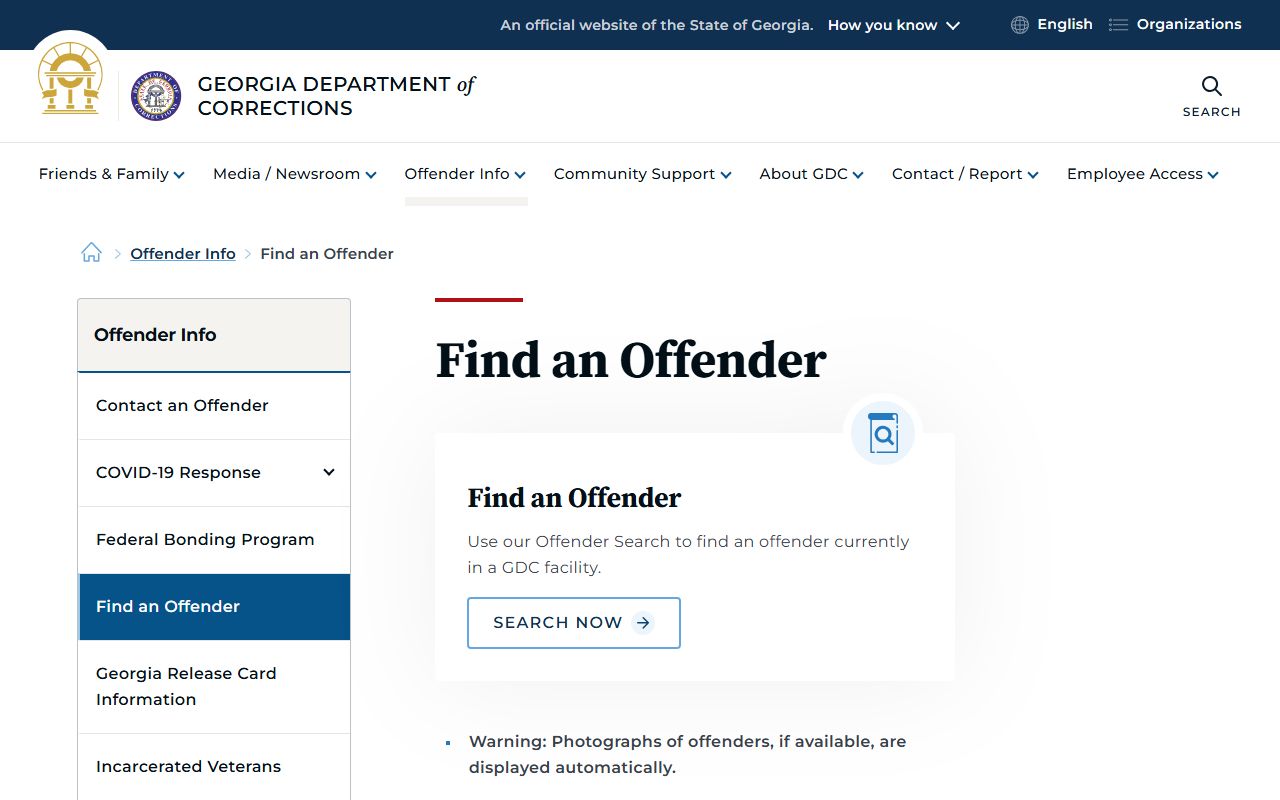
GDC search can support post-sentence checks, but it should not be presented as the first source for fresh Berrien County arrest records.
Sealed vs Expunged Charges
Georgia's criminal-history language centers on record restriction. A restricted charge may be limited for non-criminal-justice public access when the requirements of O.C.G.A. 35-3-37 are met. A sealed court record is limited by court order, rule, or statute. Juvenile charges, sealed matters, protected identifiers, adoption-related material, and some sensitive Probate Court proceedings are not ordinary public records.
| Sealed | Expunged or Restricted | |
|---|---|---|
| Public Access | Blocked or limited by court authority | Limited in public criminal-history access when approved |
| Main Source | The court where the case or document was sealed | GBI process, prosecutor, or arresting agency depending on arrest date |
| Berrien Example | Juvenile or sealed criminal court materials | Eligible criminal history under Georgia restriction rules |
Who Files Berrien Charges
The Alapaha Judicial Circuit District Attorney's Office files or pursues criminal charges in court after law enforcement arrest, booking, and warrant processes. The Berrien office is at 201 N Davis Street on the second floor, with phone (229) 686-7015. The Public Defender phone listed in the sheriff phone page is (229) 896-2858, but the Public Defender is not the records custodian. Defense eligibility and appointment usually arise through the criminal court process.
The broader GDC offender information source is shown from Georgia Department of Corrections offender information.
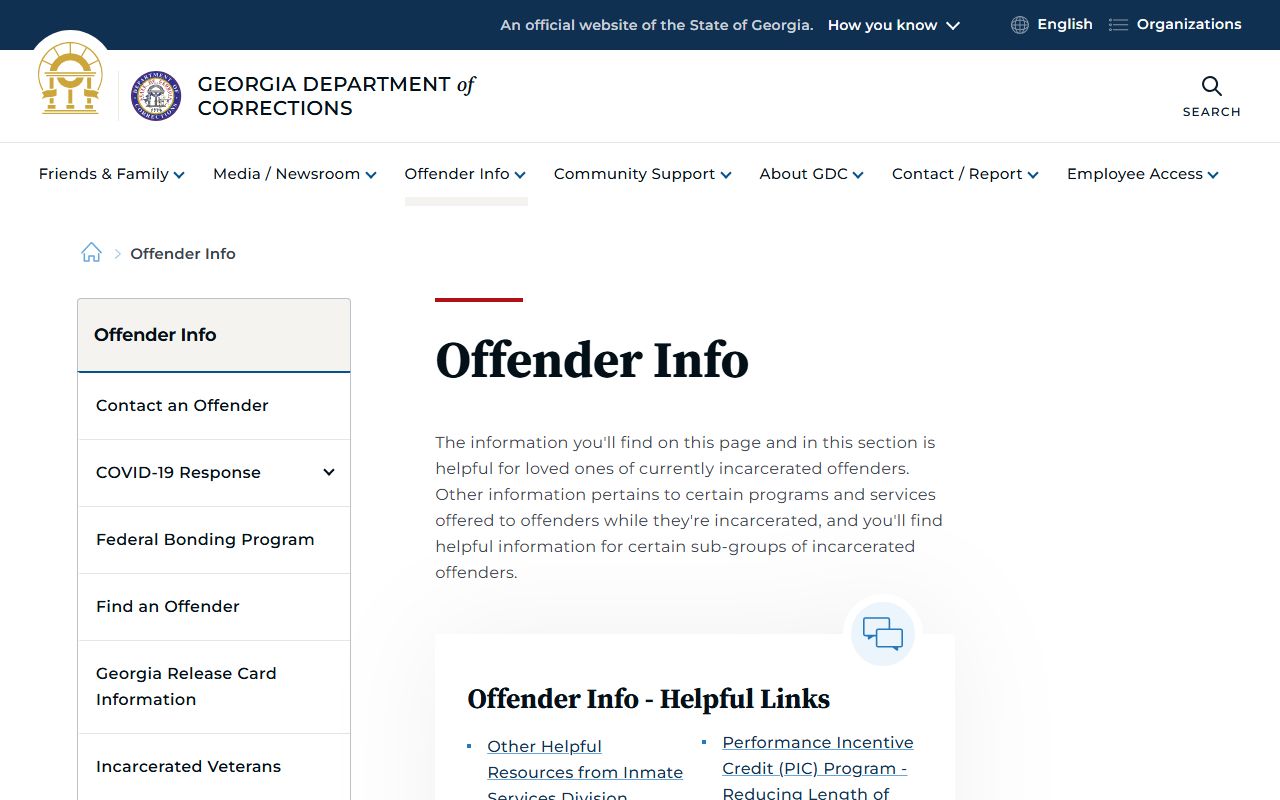
State custody sources are downstream from local court charges, so the court disposition should be checked before treating a listed offense as final.
Restricted Berrien Charge Records
Berrien County arrest records and charge records may be incomplete in public systems when a matter is juvenile, sealed, restricted, active, or tied to protected personal data. The GBI states that for arrests after July 1, 2013, a person seeking restriction generally contacts the prosecutor; for arrests before that date, application begins at the arresting agency. In Berrien County, the arresting agency may be the Sheriff's Office or a city police department, and the prosecutor is the Alapaha Judicial Circuit District Attorney.
A charge should be verified with the office that owns the record. Use the jail for custody and booking, Magistrate Court for warrant and first-appearance procedure, the Clerk of Superior Court for the filed criminal case, and the District Attorney or arresting agency for record-restriction routing. A public search result should not be used as an employment, tenant, credit, insurance, or other FCRA-regulated screening report.
Important: Arrest records can show accusations that did not become convictions, so verify the final court disposition.